
Perforated Roller Blinds: The Smart Singapore Homeowner's Guide to Light, Privacy and Style
TL;DR
Perforated roller blinds have regulated micro-gaps in the fabric that let in partial sunlight and airflow — without sacrificing privacy from the outside.
They are water resistant (Polyester + PVC construction), making them suitable for wet areas like bathrooms and kitchens.
Three roller blind fabric types exist: blackout, dim-out, and perforated — each with distinct light and privacy trade-offs.
Perforated blinds work beautifully in spaces where you want to preserve a view or complement a display without full darkness.
softhome offers over 180 designs across all three fabric types, with motorised options powered by Somfy for smart home integration.
Widths of up to 3 metres are supported on a robust mechanism that resists sagging — rare among standard roller blind systems.
—
If you've ever sat in your living room at 2pm on a clear Singapore afternoon, you already know the problem. The sun is relentless. The glare off your TV screen is unbearable. But closing your blinds completely means losing that beautiful skyline view — or worse, turning your home into a cave.
It's a balancing act that most window treatments fail to get right. Blackout options give you full control but zero natural light. Sheer curtains let everything through — light, heat, and the curious eyes of your neighbours. Neither extreme feels quite right.
That's where perforated roller blinds come in. Designed specifically for spaces that need partial light filtering and a degree of openness, they're quickly becoming a go-to solution for Singapore HDB and condo owners who want function without compromise.
What Are Perforated Roller Blinds?
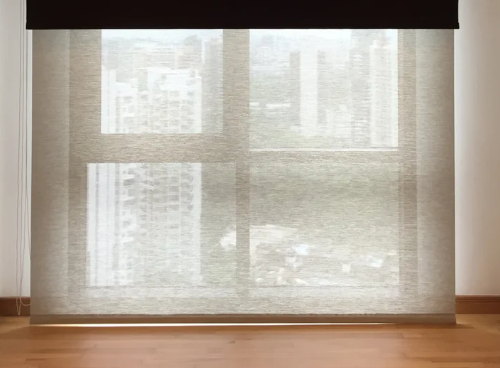
Perforated roller blinds are a type of roller blind made from fabric that contains regulated, evenly spaced micro-perforations — tiny holes engineered into the material. These gaps are small enough to preserve privacy when viewed from outside, but open enough to allow partial sunlight and gentle airflow to pass through.
The fabric is typically a Polyester and PVC composite, which gives it two practical advantages: it's water resistant and durable over time. Unlike the 100% Polyester used in dim-out blinds (which absorbs moisture and is only suitable for dry areas), perforated fabrics handle humidity well.
This makes them one of the few roller blind options genuinely suited to Singapore's tropical climate — where heat, humidity, and monsoon rain are year-round realities.
The Key Benefits of Perforated Roller Blinds
Here's what you actually get when you choose perforated over other roller blind types:
Partial light filtering — You control how much natural light enters without going completely dark. Great for spaces where you want daylight without direct glare.
Preserved outward views — The perforations maintain enough transparency for you to see out, which is a significant advantage in homes with views worth keeping.
One-way privacy — When installed correctly, people outside have difficulty seeing in during the day, especially when interior lighting is lower than exterior light.
Air permeability — The regulated gaps allow a degree of airflow, which feels more breathable than a solid blackout or dim-out surface.
Water resistance — The Polyester-PVC composition means these blinds won't warp or degrade in humid or wet conditions.
Ideal for spaces with screens or displays — softhome specifically notes that perforated blinds complement important displays, making them a smart pick for home offices, media rooms, or commercial settings.
Versatile pairing — When paired with a blackout panel in a double-layer roller system, you get the best of both worlds: diffused light during the day, full darkness at night.
Where Do Perforated Roller Blinds Work Best?
Not every room has the same needs. Here's how to think about placement:
Living Room & Common Areas The living room is often where perforated blinds shine the brightest (pun intended). You get soft, diffused natural light during the day, a preserved view of your neighbourhood or skyline, and just enough privacy that you don't feel exposed. If you run a media setup with a TV or projector, perforated blinds reduce glare without killing ambient light entirely.
Home Office / Study Working from home in Singapore's bright, sunny environment can mean constant battles with screen glare. A perforated blind softens the light without creating the gloomy, artificially lit environment that blackout blinds can create mid-afternoon. You stay alert, your screen stays visible.
Bathrooms and Wet Areas This is where the water-resistant Polyester-PVC construction becomes critical. Most fabric window treatments can't survive the sustained humidity of a Singapore bathroom. Perforated roller blinds can — making them one of very few blind options suitable for wet areas.
Commercial Spaces and Showflats If you're outfitting a retail space, showroom, or office, perforated blinds maintain a polished, professional aesthetic while managing light and heat. softhome's completed projects include commercial applications where the clean, minimal profile of roller blinds enhances the visual environment.
Discover the full range of roller blinds from softhome.
Why Perforated Roller Blinds Make Sense for Singapore's Climate
Singapore sits just one degree north of the equator. That means year-round sun, consistent heat, and UV exposure that degrades materials (and human skin) faster than most countries experience.
This context matters enormously when choosing window treatments. Here's how perforated roller blinds address the Singapore-specific challenge:
Heat management — Even with their micro-perforations, perforated fabrics reduce the amount of direct solar radiation entering your space. Compared to leaving windows uncovered or using light sheer curtains, they meaningfully cut down radiant heat gain. Paired with a blackout fabric in a double-layer system, you can dial heat reduction up significantly.
UV filtering — The PVC-composite material provides a level of UV protection even through the perforations. Over time, this matters for your furniture, flooring, and fabrics — all of which fade faster under prolonged UV exposure.
Wet area durability — Singapore's humidity doesn't just come from rain. Air conditioning cycling, kitchen steam, and bathroom moisture all affect window treatments. The water-resistant construction of perforated roller blinds means they don't absorb moisture and are significantly more durable than polyester-only alternatives in these conditions.
Tropical light quality — Singapore's intense, high-angle sunlight creates harsh shadows and extreme brightness that can be uncomfortable indoors. Perforated fabrics scatter and diffuse this light into something softer and more pleasant to live with.
Pairing Perforated Blinds: The Double-Layer Approach
One of the smartest things you can do in Singapore is use a double-layer roller blind system — one perforated panel and one blackout panel on the same window, operating independently.
During the day, you draw the perforated blind. You get filtered light, privacy, and an outward view. In the evening — or on weekends when you want complete darkness for a movie or sleep-in — you draw the blackout panel. You get 100% light blocking, 100% UV protection, and maximum privacy.
This two-in-one approach eliminates the need to choose between function and flexibility. It's a particularly popular configuration in Singapore bedrooms where residents want natural morning light on weekdays but complete darkness on weekends.
softhome's roller blind system supports this double-layer configuration, and with over 180 designs across fabric types, you can choose combinations that coordinate in colour and texture rather than clashing.
Ready to explore the right combination for your space?Book a consultation with softhome and get expert guidance on fabric pairing, sizing, and installation.
Comparing the Three Roller Blind Fabric Types
Understanding where perforated fits relative to the other options helps you make a confident decision:
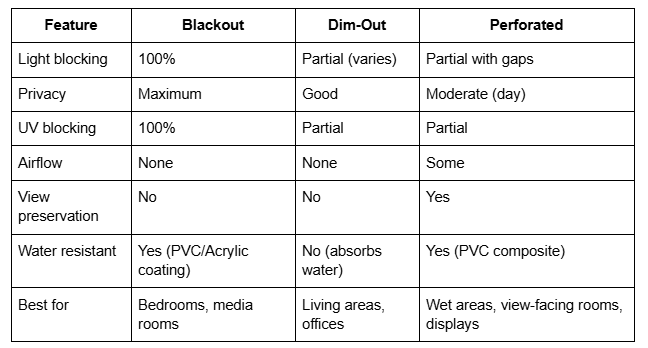
The right fabric type isn't about which is "best" — it's about which is best for your specific room, light direction, and lifestyle.
What Makes softhome Different
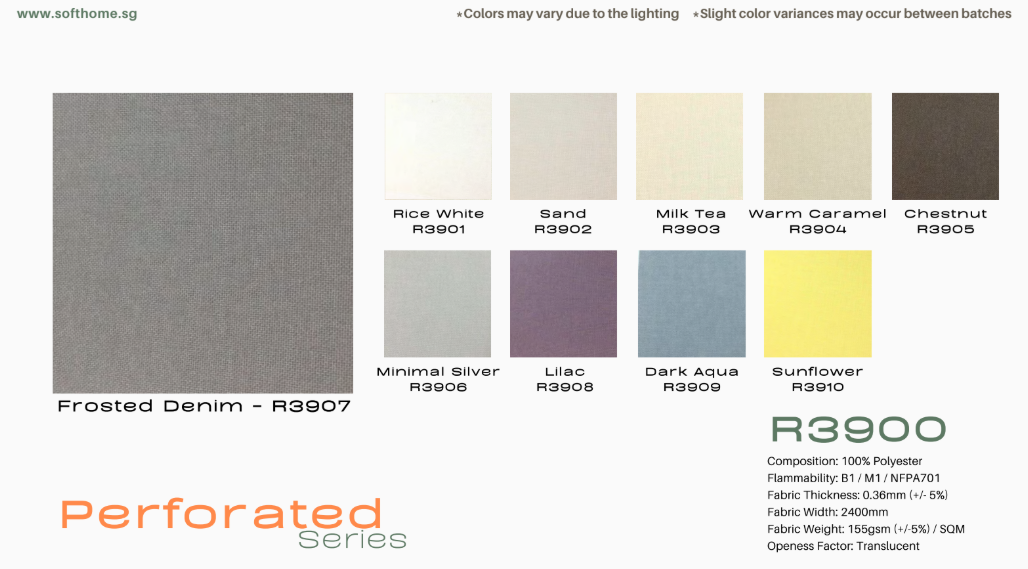
To view full range, click here.
There's no shortage of roller blind suppliers in Singapore. What sets softhome apart comes down to a few things that actually matter when you're making a considered purchase:
Over 180 designs — The range spans textures, patterns, prints, and solids across all three fabric types. Whether your interior aesthetic is minimalist Scandinavian, warm Japandi, or bold contemporary, there's a fabric that fits.
Wide-width capability — softhome's robust mechanism handles roller blinds up to 3 metres wide (and up to 3.2 metres depending on drop height) without the mid-blind sagging that's common in standard systems. For larger windows in HDB living rooms or full-height condo glazing, this is a meaningful technical advantage.
Motorised options via Somfy — softhome offers motorisation powered by Somfy, a French brand recognised globally for motorised blind and shutter reliability. Motorised blinds can be controlled via smartphone (iOS and Android), and Somfy's TaHoma Beecon hub integrates with both Google Assistant and Amazon Alexa for full voice-control capability. If you're building a smart home setup, this matters.
System options — Choose between white or black head-rail systems to match your ceiling and wall finishes. These details make the difference between blinds that look integrated versus blinds that look installed.
Personalised measure and quote — softhome offers a personalised measure and quote service, so you get accurate sizing and pricing before committing to anything.
Thinking about motorised perforated roller blinds?Explore softhome's full blinds range orget in touch to book your appointment.
Practical Tips Before You Buy
A few things worth thinking through before you commit:
Consider your sun direction first. West-facing windows in Singapore get brutal afternoon sun. East-facing windows get intense morning light. Perforated blinds are a good option for both — but if your west-facing room is a bedroom, you might want the double-layer approach so you're not waking up too early on a Sunday.
Think about interior vs exterior brightness. Perforated blinds offer privacy because the brighter side (usually outdoors during the day) overwhelms the view from the darker side (your interior). At night, this reverses — interior lighting means people outside can see in through the perforations. If nighttime privacy matters, pair with a dim-out or blackout panel.
Check if your window is in a wet area. If yes, perforated is the correct fabric choice among the three roller blind types. Dim-out fabrics absorb water and are not suitable for bathrooms or kitchens.
Plan for wide windows early. If you have windows wider than 2 metres, discuss this at consultation stage. softhome's wide-width roller system is purpose-built for this, but it's worth confirming specifications for your exact dimensions.
Frequently Asked Questions
What are perforated roller blinds?
Perforated roller blinds are a type of roller blind made from fabric with regulated, evenly spaced micro-holes. These gaps allow partial sunlight and airflow to pass through while providing a degree of privacy. They are made from a Polyester-PVC composite, making them water resistant and suitable for wet areas.
What is the difference between blackout, dim-out, and perforated roller blinds?
Blackout roller blinds block 100% of light and UV, making them ideal for bedrooms and media rooms. Dim-out roller blinds allow some daylight in while providing privacy, but are made of 100% Polyester and are only suitable for dry areas. Perforated roller blinds have regulated gaps that let in partial light and some airflow, and are water resistant — making them suitable for humid or wet environments as well.
Are perforated roller blinds suitable for bathrooms in Singapore?
Yes. Because perforated roller blinds are made from a Polyester-PVC composite, they are water resistant and can withstand the humidity and moisture common in Singapore bathrooms. This makes them one of the few roller blind fabric types genuinely suitable for wet areas — unlike dim-out fabrics, which absorb water.
Can I pair perforated roller blinds with blackout blinds?
Yes — and it's a popular configuration. A double-layer roller blind system places one perforated panel and one blackout panel on the same window, operated independently. During the day you use the perforated blind for soft light and privacy; at night or when full darkness is needed, you draw the blackout panel. softhome's roller blind system supports this dual-layer approach.
Do perforated roller blinds provide privacy at night?
Perforated blinds provide privacy during the day because the brighter outdoor environment overwhelms the view into your darker interior. At night, this reverses — when your interior is lit and the outside is dark, the perforations can allow some visibility from outside. For full nighttime privacy, pair with a dim-out or blackout layer.
What roller blind widths does softhome support?
softhome's robust roller blind mechanism can accommodate widths of up to 3 metres (or 3.2 metres depending on height) without mid-blind sagging — a common issue with standard roller blind systems when dealing with wide spans.
Can softhome's roller blinds be motorised?
Yes. softhome offers motorisation via Somfy, a leading French motor brand. Motorised roller blinds can be controlled via smartphone using dedicated iOS and Android apps. With the Somfy TaHoma Beecon hub, they integrate with Google Assistant and Amazon Alexa for voice-control commands.
How do I choose between perforated and dim-out roller blinds?
If your space needs natural light and you have a view worth preserving, perforated is the better choice. If your space is a dry area and you need stronger privacy without complete darkness, dim-out may suit better. For wet areas like bathrooms, perforated is the correct choice since dim-out fabrics absorb moisture.
