
Dim-Out Roller Blinds Singapore: The Smart Middle Ground Between Privacy and Natural Light
TL;DR
Dim-out roller blinds provide meaningful privacy and light reduction while still allowing natural daylight to filter into your space — the amount varies by fabric type
Made from 100% polyester — importantly, this means they absorb water and are only suitable for dry areas (not bathrooms or wet environments)
They sit between sheer curtains and full blackout in terms of light control — ideal for living rooms, dining areas, and home offices where daylight is still part of the appeal
softhome carries dim-out roller blinds across over 180 designs, textures, patterns, and prints — a wide aesthetic range to suit any interior
Available in white or black system (head-rail, pulley cord, bottom bar) and with optional Somfy motorisation for smart home integration
softhome's robust mechanism handles widths up to 3 metres (or 3.2m depending on height) without the sagging that affects most conventional systems
Best used as part of a considered window plan — if your room needs full darkness, blackout roller blinds are the right choice instead
—
You don't want the sun pouring in unfiltered. The glare is uncomfortable, the heat builds quickly, and privacy from neighbouring units is a genuine concern. But you also don't want to seal the room off from daylight entirely. The connection to the outside, the warmth of natural light filtered through fabric, the sense of openness — these are qualities that make a room liveable rather than just functional.
This is exactly the problem dim-out roller blinds are designed to solve. They reduce light and provide privacy without eliminating the daylight that makes a room feel alive. In Singapore's high-sun environment, where window treatment decisions have real consequences for comfort, temperature, and wellbeing, dim-out roller blinds occupy an important and often underappreciated position in the range.
This guide covers everything you need to know — what dim-out roller blinds are, where they work best, what their limitations are, and how softhome's range gives you both performance and aesthetic flexibility.
What Are Dim-Out Roller Blinds? A Clear Definition
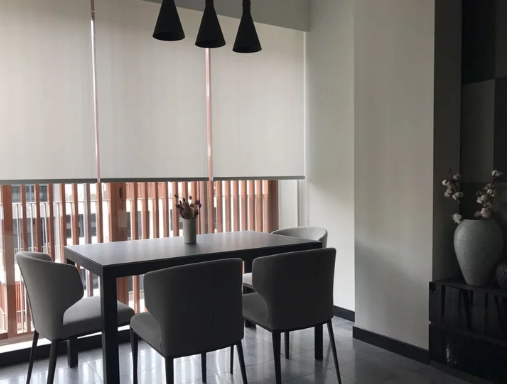
Dim-out roller blinds are a type of roller blind — a single-fabric window covering that rolls up or down on a tube mechanism — made from a fabric that significantly reduces incoming light without blocking it entirely.
Unlike blackout roller blinds, which use a PVC or acrylic coating to achieve 100% light and UV blockage, dim-out fabrics are constructed to allow a partial amount of natural light to pass through. The amount of light that filters into the room varies depending on the specific fabric chosen — different dim-out fabrics have different densities, and softhome's range reflects this variety.
softhome describes dim-out roller blinds as the right choice for those who "require privacy and still wish to allow daylight into their space" — a precise and useful definition that captures exactly what this fabric type is for.
The material composition matters practically as well as functionally. softhome's dim-out roller blinds are made from 100% polyester. Without the waterproof PVC or acrylic coating found in blackout and perforated blinds, dim-out fabric absorbs water — which means it is only suitable for dry indoor areas. This is an important constraint to understand before selecting dim-out for any window in a humid or moisture-exposed environment.
Explore the different types of roller blinds by softhome.
The Core Benefits of Dim-Out Roller Blinds
Meaningful Privacy Without Darkness
The defining benefit of dim-out roller blinds is the combination of privacy and retained daylight. When a dim-out blind is lowered, it creates a visual barrier that prevents clear sightlines from outside into your home — passersby, neighbours in adjacent units, and anyone looking towards your windows will see fabric rather than directly into your space. But inside the room, natural light continues to filter through softly, maintaining an ambient brightness that keeps the space feeling open rather than enclosed.
This balance is genuinely difficult to achieve with other window treatments. Sheer curtains filter light but provide limited daytime privacy. Blackout roller blinds provide complete privacy but eliminate daylight entirely. Dim-out sits squarely between the two — and for many Singapore living spaces, this middle position is exactly right.
Significant Light and Glare Reduction
Singapore's tropical sun produces intense, directional light that creates harsh glare on screens, reflects uncomfortably off hard surfaces, and makes rooms feel overexposed. Dim-out roller blinds reduce this intensity significantly — softening incoming sunlight into a more even, diffused quality that is more comfortable to live with.
The result is not darkness but modulation. A living room with a dim-out blind lowered feels controlled and comfortable rather than raw and overlit. The light that enters is present but tamed, filling the room evenly rather than cutting through it in bright, uncomfortable shafts.
Partial Heat Reduction
While dim-out roller blinds are not as effective as blackout at reducing solar heat gain — the latter's coating actively reflects radiation — they do reduce the amount of direct sunlight entering the room and therefore contribute to a cooler interior temperature. In Singapore's climate, any reduction in solar heat gain is meaningful, particularly in the afternoon hours when west-facing rooms absorb the most intense sun.
Dim-out blinds won't replace air conditioning, but they reduce the thermal load that air conditioning needs to manage — a modest but real contribution to energy efficiency over time.
A Softer Aesthetic Quality
Practically, there is an aesthetic dimension to dim-out roller blinds that blackout fabric cannot match in the same way. Because light passes partially through dim-out fabric, the blind glows subtly when backlit by bright sunlight — creating a soft, luminous quality that adds warmth and depth to a room. This quality is most visible in living spaces and dining areas where the curtain is a prominent visual element and the way it interacts with light is part of the room's atmosphere.
Across softhome's range of over 180 designs, this glow effect varies by fabric density, weave, and tone — a detail worth considering during selection.
Learn more about softhome roller blinds here.
Where Dim-Out Roller Blinds Work Best in Singapore
Understanding where dim-out roller blinds are the right choice — and equally, where they are not — makes the selection decision much clearer.
Living Rooms
The living room is the natural home of dim-out roller blinds. It is a space designed for comfort, social interaction, and spending extended periods of time in — and natural light is a genuine asset in this context. Dimming the sun's intensity while retaining its presence creates exactly the kind of welcoming, liveable atmosphere that a living room calls for.
For living rooms that face east and receive bright morning light, or west-facing rooms that absorb intense afternoon sun, dim-out roller blinds modulate this light into something comfortable without sealing the room off from the outside world.
Dining Areas
Dining spaces benefit from similar qualities — bright enough to feel energising during mealtimes, soft enough to avoid the harsh, over-lit quality of direct sunlight streaming unfiltered across the table. Dim-out roller blinds are a strong choice for east-facing dining areas that see the morning sun, and for any dining space where the ambience during meals matters.
Home Offices and Study Rooms
Natural light improves sustained concentration and reduces eye strain during extended desk work. A home office with a dim-out blind lowered maintains the brightness that keeps the mind alert while cutting the glare that builds eye fatigue over hours. The filtered light quality is also better for screen visibility than either direct sunlight (which creates reflections) or artificial-only lighting.
Bedrooms — With a Caveat
Dim-out roller blinds can work in bedrooms for homeowners who do not need or want complete darkness — those who prefer to wake naturally with some ambient light rather than in full blackout conditions. However, for shift workers, parents managing young children's sleep, or anyone sensitive to morning light,blackout roller blinds are the right choice. Dim-out lets light through — that is by design, but it matters in a bedroom context.
Common Areas and Multi-Purpose Rooms
Rooms that serve multiple functions throughout the day — a playroom that doubles as a TV space, a living area used for both daytime work and evening relaxation — often benefit from the flexibility of dim-out. The blind provides meaningful privacy and light control without committing the room to darkness at all hours.
What Dim-Out Roller Blinds Are NOT Suitable For
Being clear about limitations is as important as describing benefits.
Wet and humid environments. softhome's dim-out roller blinds are made from 100% polyester without a waterproof coating — this means the fabric absorbs water. Installing dim-out blinds in a bathroom, kitchen, laundry area, or any window position exposed to regular moisture, condensation, or humidity will cause the fabric to retain moisture, potentially leading to mould, warping, or premature deterioration.
For wet areas,blackout roller blinds (polyester with PVC or acrylic coating — water resistant) or perforated roller blinds (also water resistant) are the appropriate fabric types. Confirm your room's moisture exposure with softhome during consultation before selecting dim-out.
Rooms requiring complete darkness. Dim-out roller blinds are specifically designed to allow some light through. If the goal is a genuinely dark room — for a bedroom that needs full blackout conditions, a home theatre, or any space where light intrusion is unacceptable — dim-out will not deliver. The right product for that requirement is ablackout roller blind, which blocks 100% of light through the fabric.
Why Dim-Out Roller Blinds Are Particularly Relevant in Singapore
Singapore's environment creates a specific set of conditions where the dim-out roller blind's particular balance of qualities becomes genuinely useful.
Privacy in dense residential housing. HDB flats, condominiums, and executive apartments sit close together, with windows frequently facing adjacent units, shared corridors, or ground-level walkways. Dim-out roller blinds provide a meaningful visual barrier from outside while maintaining interior brightness — the privacy benefit matters as much as the light control.
Open-plan living designs. Singapore's newer residential developments increasingly favour open-plan layouts where the living, dining, and kitchen areas share the same visual field. In these spaces, the quality and character of natural light affect the entire social area. Dim-out roller blinds allow this light to remain present and pleasant rather than forcing a binary choice between too bright and too dark.
Complementing smart home setups. As softhome offers Somfy motorisation for dim-out roller blinds, they can be integrated into automated schedules that adjust to the time of day — partially lowered during the bright midday hours, raised fully in the morning, lowered at dusk for privacy. This kind of responsive automation suits Singapore's consistent daily sun cycle particularly well.
Over 180 Designs: Aesthetic Variety Without Sacrificing Function
A common assumption about functional window treatments is that performance comes at the cost of aesthetics — that choosing a dim-out blind means accepting a limited range of colours or patterns. softhome's range directly challenges this.
With over 180 designs, textures, patterns, and prints across the full roller blind collection, including the dim-out range, there is genuine breadth to explore. Clean, solid neutrals for minimalist and Scandinavian-influenced interiors. Textured weaves that add material depth to rooms with hard finishes. Subtle patterns for spaces where the blind is meant to be a considered design element rather than a background feature.
For living rooms and dining areas in particular — where the dim-out blind is a prominent visual feature and its interaction with light is part of the room's daily character — this aesthetic range matters. The right fabric doesn't just manage light; it contributes to how the whole room feels.
Hardware Finish: White System or Black System
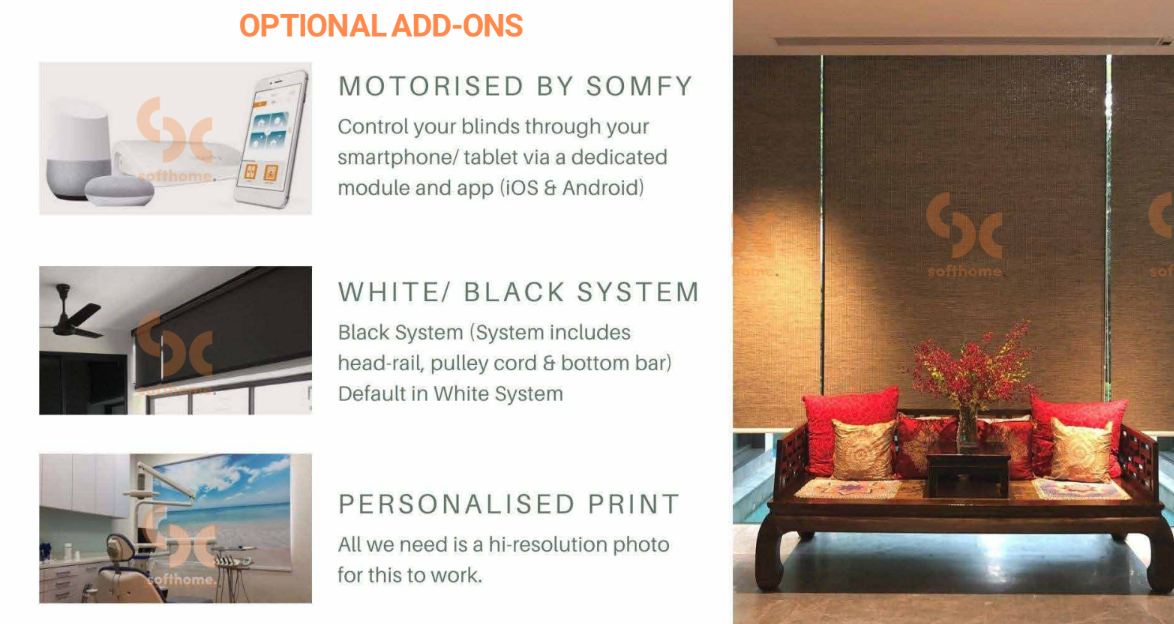
softhome's dim-out roller blinds are available in two hardware finish options — White System (the default) and Black System. The system covers the visible hardware elements: the head-rail, the pulley cord, and the bottom bar.
For living rooms and dining areas — which are where dim-out blinds most commonly appear — the hardware finish is a visible design detail that should be chosen in context rather than by default. A white system in a bright, neutral interior blends into the surrounding surfaces and lets the fabric be the focal point. A black system in a space with dark accents, contrast-heavy décor, or a more graphic aesthetic becomes a deliberate visual element rather than an afterthought.
Wide Roller Blinds: No Sagging Up to 3 Metres
For living rooms and dining areas with wide window spans — increasingly common in Singapore's newer residential developments — the risk of sagging across the middle of a wide roller blind is a real practical concern with conventional systems. When the tube and fabric bow downward under their own weight across a wide installation, the result is uneven light control, a compromised appearance, and a blind that doesn't function as designed.
softhome's robust mechanism supports dim-out roller blinds up to 3 metres wide — or up to 3.2 metres wide depending on the height of the blind — without deflection in the middle. For wide window configurations that are exactly the kind of installation most likely to use dim-out blinds (open-plan living areas, large dining space windows), this mechanical advantage is worth factoring in specifically.
Somfy Motorisation: Smart Dim-Out Roller Blinds
softhome offers Somfy motorisation as an add-on for dim-out roller blinds — the same French-engineered system available across the roller blind range. Somfy is described by softhome as "the most reliable and respected brand" in motorisation, with a dedicated app for iOS and Android and full smart home integration.
With Somfy motorised dim-out roller blinds, you can:
Control your blinds remotely via smartphone or tablet at any time
Set automated schedules — lower the blind at the brightest part of the day, raise it in the morning, adjust at dusk without lifting a finger
Use voice commands through Google Assistant or Amazon Alexa via the Somfy TaHoma Beecon hub
For dim-out blinds in living rooms or dining areas, the scheduling capability is particularly practical. Singapore's daily sun cycle is consistent and predictable — a schedule that lowers the blind during the 11am–3pm peak sun window and raises it in the early evening means the blind adapts to the day automatically, without requiring any manual interaction.
softhome provides setup guides for both Google Assistant and Amazon Alexa linkage for those who want full voice-control integration.
Interested in motorised dim-out roller blinds for your living room or dining area? Book a consultation with softhome and get expert guidance on the right setup for your space.
Why softhome for Dim-Out Roller Blinds Singapore?
softhome's approach to dim-out roller blinds is built on the same foundations as its broader window treatment offer: genuine product range, mechanical quality, and expert guidance.
Clear fabric type differentiation — softhome is explicit about what dim-out does and doesn't do, including the dry-areas-only limitation. You get accurate guidance, not overselling
Over 180 designs — a genuinely broad aesthetic range across all fabric types including dim-out, with options in textures, patterns, and solid colours
Wide-width mechanism — up to 3m (or 3.2m depending on height) without sagging, important for the living rooms and open-plan spaces where dim-out is most commonly used
White and black system options — hardware finish customised to your interior
Somfy motorisation — smart home integration with app control, scheduling, and Google Assistant or Alexa voice commands
Expert consultation — softhome's team assesses your specific room, orientation, moisture environment, and light requirements before recommending a fabric type and configuration
Proven commercial track record — completed projects across HDB flats, condominiums, offices, function rooms, photography studios, and more — experience that informs every recommendation
Consultations are by appointment, Monday to Friday, 9:30am to 5:30pm, at 48 Tannery Lane, #04-00A, Tailoo Building.
Ready to find the right dim-out roller blind for your home? View the full range at softhome or book a measure and quote to get started.
Practical Tips: Getting the Most from Dim-Out Roller Blinds
Confirm your room is a dry area before selecting dim-out. Dim-out roller blinds absorb water — they cannot be used in bathrooms, kitchens with condensation near the window, or any humid environment. If there is any moisture exposure at the window, switch to blackout roller blinds (water resistant) or perforated (also water resistant) instead.
Match fabric density to how much light you want. The amount of light that passes through varies by dim-out fabric type. If you want more ambient light, choose a lighter, lower-density fabric. If you want the room relatively dim but not dark, choose a denser option. softhome's team can guide you through this during consultation.
For wide living room windows, ask about the robust mechanism. Dim-out blinds are most commonly used in living areas, which often have the widest window spans. softhome's mechanism handles widths up to 3m (or 3.2m depending on height) without sagging — specify your window dimensions from the start.
Factor in motorisation for large or frequently adjusted blinds. A wide dim-out blind that needs to be lowered and raised daily is a practical candidate for Somfy motorisation — the convenience compounds quickly over time. Plan motorisation from the outset rather than retrofitting.
Match the hardware system colour to your room. White system or black system — choose in the context of your wall colour, ceiling, and window frame. In a bright neutral interior, white blends in. In a space with dark accents, black creates a more deliberate, finished look.
Comparing dim-out to other roller blind options? Explore softhome's full roller blinds range — blackout, dim-out, and perforated — or check out the full curtains range if you're considering fabric window treatments instead.
FAQ: Dim-Out Roller Blinds Singapore — Answered
What are dim-out roller blinds and how do they work?
Dim-out roller blinds are made from a partially light-filtering fabric — they reduce the amount of light entering a room significantly without blocking it entirely. The amount of light that passes through varies depending on the specific fabric. They provide meaningful privacy while retaining natural daylight, making them ideal for living rooms, dining areas, and home offices.
What is the difference between dim-out and blackout roller blinds?
Blackout roller blinds block 100% of light and UV through the fabric, deliver maximum heat reduction, and are water resistant. Dim-out roller blinds allow a partial amount of natural light through, provide high but not maximum privacy, and are made from 100% polyester without a waterproof coating — meaning they are only suitable for dry areas. Choose blackout when full darkness is needed; choose dim-out when some daylight is still desired alongside privacy.
Can dim-out roller blinds be used in a bathroom?
No. softhome's dim-out roller blinds are made from 100% polyester, which absorbs water — making them unsuitable for bathrooms or any moisture-exposed environment. For wet areas, blackout roller blinds (water resistant) or perforated roller blinds (also water resistant) are the appropriate choices.
How much light do dim-out roller blinds block?
The amount of light reduction varies depending on the specific dim-out fabric chosen — different fabrics have different densities. softhome's team can guide you through the available options and their respective light-filtering levels during consultation, matched to your room's requirements.
Are dim-out roller blinds suitable for bedrooms in Singapore?
Dim-out roller blinds can work in bedrooms for homeowners who prefer to wake with some natural ambient light. However, for shift workers, parents managing young children's sleep schedules, or anyone sensitive to morning light, blackout roller blinds are the more reliable choice — dim-out is designed to let light through, which is a benefit in some contexts and a limitation in others.
Can softhome's dim-out roller blinds be motorised?
Yes. softhome offers Somfy motorisation as an add-on for dim-out roller blinds, allowing control via smartphone (iOS and Android), automated scheduling, and voice commands through Google Assistant or Amazon Alexa via the Somfy TaHoma Beecon hub.
How wide can dim-out roller blinds be made?
softhome's robust mechanism supports roller blinds — including dim-out — up to 3 metres wide, or up to 3.2 metres wide depending on the height of the blind, without sagging or deflection across the middle. This is especially relevant for living rooms and open-plan spaces where wide window spans are common.
